
Understanding ACEs
ACEs (Adverse Childhood Experiences) are serious childhood traumas that can result in toxic stress. Prolonged exposure to ACEs can create toxic stress, which can damage the developing brain and body of children and affect overall health. Toxic stress may prevent a child from learning or playing in a healthy way with other children, and can cause long-term health problems.
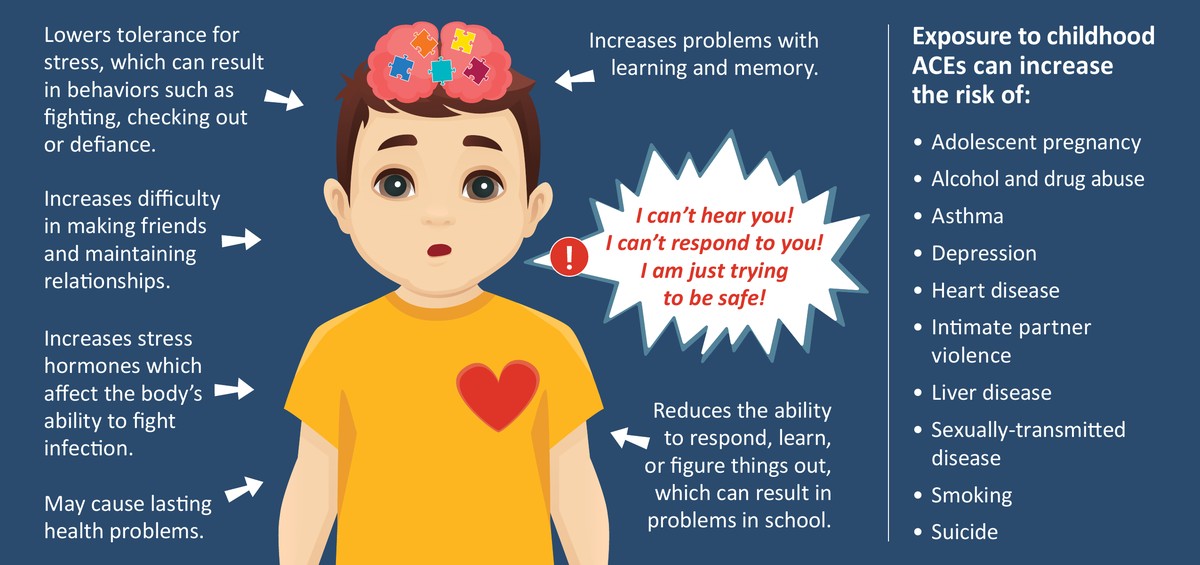
How toxic stress affects a child
Lowers tolerance for stress, which can result in behaviors such as fighting, checking out or defiance.
Increases difficulty in making friends and maintaining relationships.
Increases stress hormones which affect the body's ability to fight infection.
May cause lasting health problems.
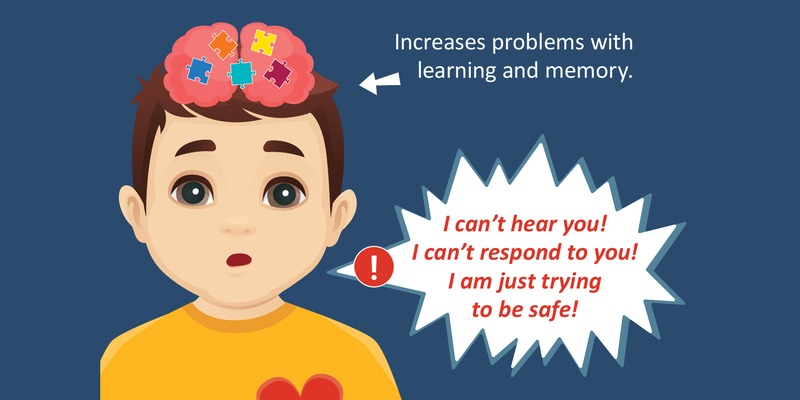
Increases problems with learning and memory.
Reduces the ability to respond, learn, or figure things out, which can result in problems in school.
"I can't hear you! I can't respond to you! I am just trying to be safe!"
Survival mode response
Toxic stress increases a child's heart rate, blood pressure, breathing and muscle tension. Their thinking brain is knocked off-line. Self-protection is their priority.
Exposure to childhood ACEs can increase the risk of:
Adolescent pregnancy
Alcohol and drug abuse
Asthma
Depression
Heart disease
Intimate partner violence
Liver disease
Sexually-transmitted disease
Smoking
Suicide
ACEs (Adverse Childhood Experiences) can include:
Abuse: Emotional / physical / sexual
Bullying / violence of / by another child, sibling, or adult
Homelessness
Household: Substance abuse / mental illness / domestic violence / incarceration / parental abandonment, divorce, loss
Involvement in child welfare system
Medical trauma
Natural disasters and war
Neglect: Emotional / physical
Racism, sexism, or any other form of discrimination
Violence in community
Parents and caregivers can help

Help children identify, express and manage emotions.
Create safe physical and emotional environments (home, school, community, systems).
Understand, prevent and respond to ACEs.
"…One of the biggest myths that we have to bust is that if you have experienced childhood adversity, there's nothing we can do about it."
– Nadine Burke Harris, MD, MPH, FAAP, Surgeon General of California
What is resilience?
Research shows that if caregivers provide a safe environment for children and teach them how to be resilient, that helps reduce the effects of ACEs.
What does resilience look like?
Having resilient parents and caregivers who know how to solve problems, have healthy relationships with other adults, and build healthy relationships with children.
Building attachment and nurturing relationships
Adults who listen and respond patiently to a child in a supportive way, and pay attention to a child's physical and emotional needs.
Building social connections
Having family, friends, neighbors, community members who support, help and listen to children.
Meeting basic needs
Provide children with safe housing, nutritious food, appropriate clothing, and access to health care and good education, when possible. Make sure children get enough sleep, rest, and play.
Learning about parenting, caregiving and how children grow
Understand how caregivers can help children grow in a healthy way, and what to expect from children as they grow.
Building social and emotional skills
Help children interact in a healthy way with others, manage emotions, communicate their feelings and needs, and rebound after loss and pain.
Special thanks to the Community & Family Services Division at the Spokane (WA) Regional Health District for developing and sharing the original parent hand-out. This resource was reviewed by the California Collaborative ACEs Learning and Quality Improvement Collaborative (CALQIC) Patient Community Advisory Board. Produced by PACEs Connection with support from Family Hui. ©2021 PACEs Connection.